Lift / power
Changes all main-rotor blade angles together
Raising the collective generally increases rotor thrust. Engine power and anti-torque demand change with it.
Primary effect: climb or descent05 / 06 · RW
Rotorcraft at a shared airfield
A different way of flying brings a different perspective — and valuable experience when aviation communities meet.
Contact the club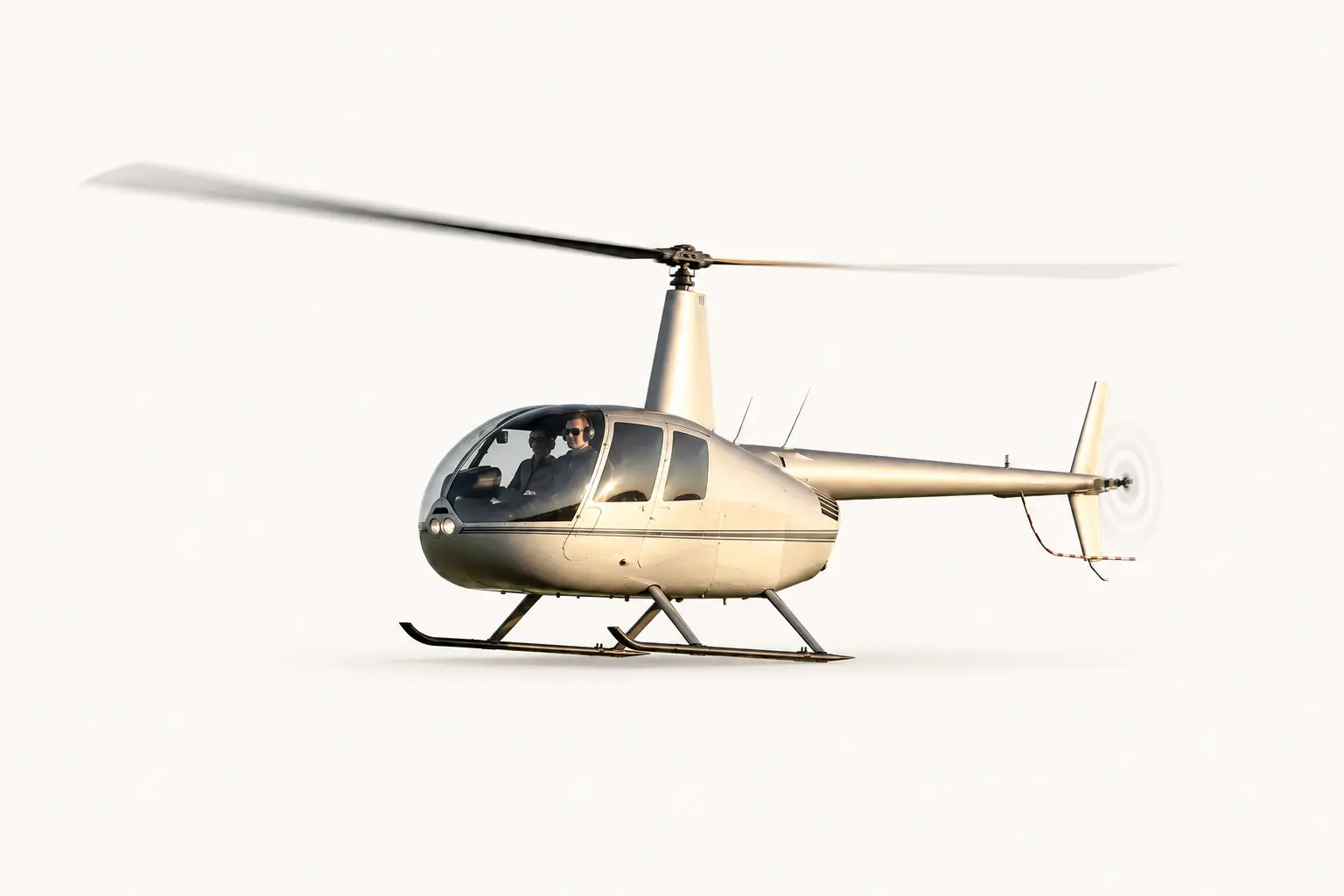
Rotorcraft at a shared airfield
Helicopters add another dimension to life at the airfield. Encounters with pilots and crews allow modellers, enthusiasts and young aviators to see the principles of rotor flight up close.
Every visit is organised through prior coordination. Operational decisions remain governed by official information, local conditions and the crew’s professional judgement.
RW / ROTORCRAFT
An educational guide to helicopter controls, rotor concepts and safe behaviour on the ground, with direct links to authoritative learning material.
Three coordinated controls
Select a control to see its primary effect. In real flight all controls interact and the pilot continuously coordinates power, attitude and yaw.
Raising the collective generally increases rotor thrust. Engine power and anti-torque demand change with it.
Primary effect: climb or descentRotor concepts
Change the sample values to explore two basic relationships. The figures are mathematical illustrations, not approved limits for any helicopter.
Tip speed uses circumference × RPM. The Mach estimate uses an approximate local speed of sound. Actual rotor aerodynamics also depend on forward speed, blade geometry, altitude and manufacturer limits.
On the ground
The safest approach is the one explicitly directed by the crew. Never assume a stopped-looking rotor is harmless.
Approach or leave only after the pilot or authorised crew member has clearly directed you.
Approach from the visible sector specified by the crew; never walk behind the helicopter or near the tail rotor.
Hats, bags, tools, paper and loose clothing can become dangerous foreign objects in rotor wash.
Main-rotor clearance changes with slope, wind and blade movement. Do not raise equipment or arms above your head.
Children, spectators, vehicles and animals remain outside the safety area unless escorted and specifically authorised.
Essential vocabulary
Authoritative sources
European safety priorities, analyses and safety-promotion material for rotorcraft.
Open sourceFAAA structured official handbook covering aerodynamics, controls, systems and flight operations.
Open sourceEASAThe European safety strategy and its focus areas for civil rotorcraft.
Open sourceLBHSLocal rules for people, aircraft and movement in the operational area.
Open sourceThree perspectives
RWRotor flight reveals in a new way how lift, control and power work together.
Organised visits can turn a complex machine into a clear and inspiring aviation lesson.
Pilots, modellers and enthusiasts find common ground in preparation, discipline and respect for risk.
Taking part
Contact the club to discuss a possible format and organisation. Any event depends on required permissions, the operational picture and conditions.
avioclubhaskovo@gmail.comActivities